


How much mulch do I actually need? This mulch calculator does the math for you. Enter the size and shape of your bed, border or tree ring, pick a depth, and it returns the volume in cubic yards and cubic feet — plus the number of bags, the approximate weight, an estimated cost, and a straight answer on whether to buy bags or bulk.
1. Select the shape
2. Enter the measurements
3. Mulch type
4. Options
Estimate the cost (optional)
Please enter your bed measurements and a mulch depth.
How much mulch do I need?
Measure the bed, pick a depth, multiply the two, then convert to cubic yards or bags. The calculator above does it instantly — pick a shape, enter the measurements in feet, inches or yards, set a depth and a mulch type, and it returns yards, bags, weight and cost. This is the formula it runs:
cubic yards = (length ft × width ft × depth ft) ÷ 27 bags = total cubic feet ÷ bag size in cubic feet- Find the area in square feet — length × width for a bed or border, π × radius² for a round one. For an irregular bed, split it into rectangles and add the results.
- Multiply by depth in feet. Inches ÷ 12 = feet, so 3 inches is 0.25 ft.
- Divide by 27 — the number of cubic feet in the cubic yard bulk mulch is sold by.
- Divide by the bag size, usually 2 cubic feet, and round up.
- Add about 10% for settling and spillage. The calculator does this by default.
How deep should mulch be?
Three inches suits most beds. That is usually enough to hold moisture in the soil and shade out weed seeds, and shallow enough that rain and air still reach the roots. Two inches is a refresh depth for a bed that already has mulch under it; four inches suits a brand-new bed with a stubborn weed problem.
Deeper is rarely better: past about four inches the layer stays soggy, starves roots of oxygen and pushes roots up into the mulch. Fine mulches — compost, shredded leaves — pack tighter, so keep those thinner.
| Where it's going | Depth | Notes |
|---|---|---|
| Flower and shrub beds | 3" | The default. Refresh with 1–2" a year as it breaks down. |
| New bed with a weed problem | 4" | Lay cardboard underneath first for a season of extra suppression. |
| Raised vegetable beds | 1–2" | Keep it light so the soil warms in spring. Straw and compost work best. |
| Around trees and shrubs | 2–4" | Never against the trunk — leave a bare collar. |
| Garden paths | 4–6" | Wood chips over cardboard or fabric. |
What is the 3-3-3 rule for mulch?
The 3-3-3 rule is a shorthand for mulching trees: spread the mulch about 3 inches deep, keep it 3 inches back from the trunk, and extend the ring about 3 feet out from the base. It is a memory aid rather than a standard, but it prevents the two most common mistakes — piling mulch against bark, and laying a ring so small it does nothing for the roots.
Mulch coverage by depth
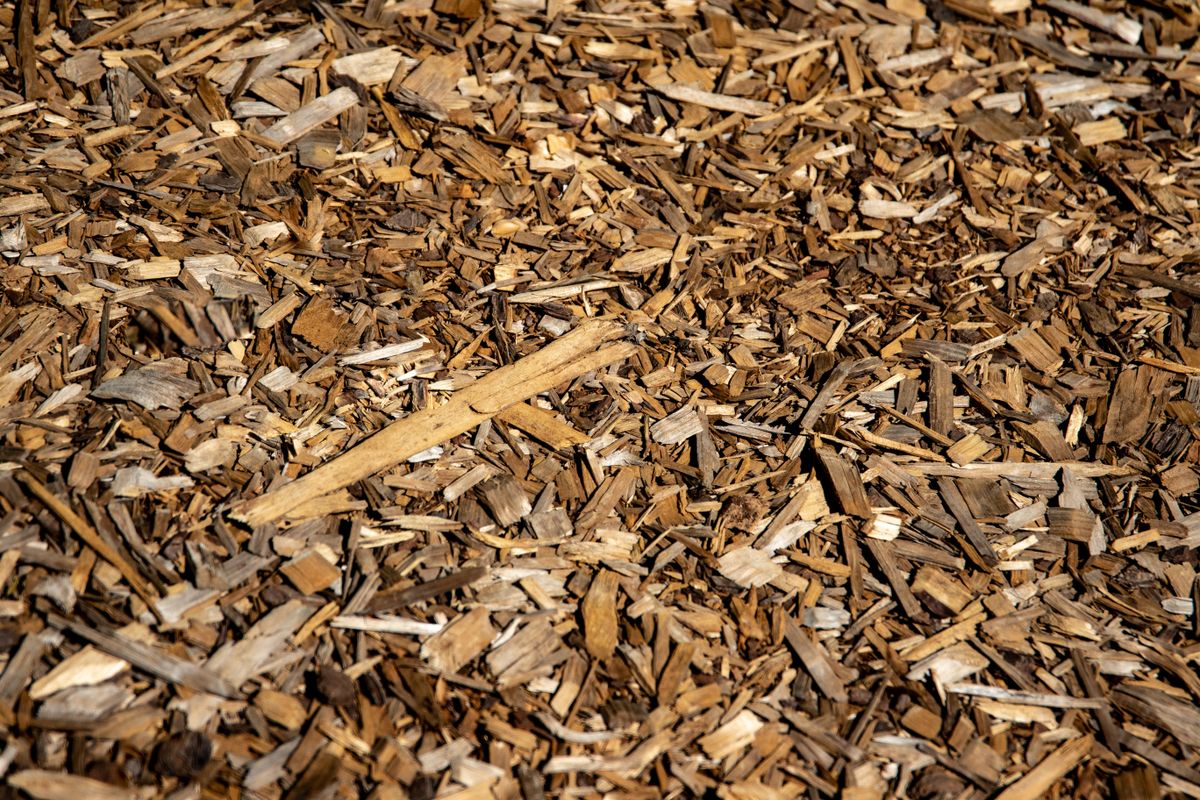
One cubic yard of mulch covers a different area depending on how deep you spread it. Use this table as a quick sanity check on any figure:
| Depth | Coverage per cubic yard | Coverage per 2 cu ft bag | Bags per 100 sq ft |
|---|---|---|---|
| 1 inch | ~324 sq ft | ~24 sq ft | 5 bags |
| 2 inches | ~162 sq ft | ~12 sq ft | 9 bags |
| 3 inches | ~108 sq ft | ~8 sq ft | 13 bags |
| 4 inches | ~81 sq ft | ~6 sq ft | 17 bags |
| 6 inches | ~54 sq ft | ~4 sq ft | 25 bags |
Bag counts are rounded up to whole bags and exclude the 10% buffer.
Bulk vs bagged mulch — which should you buy?
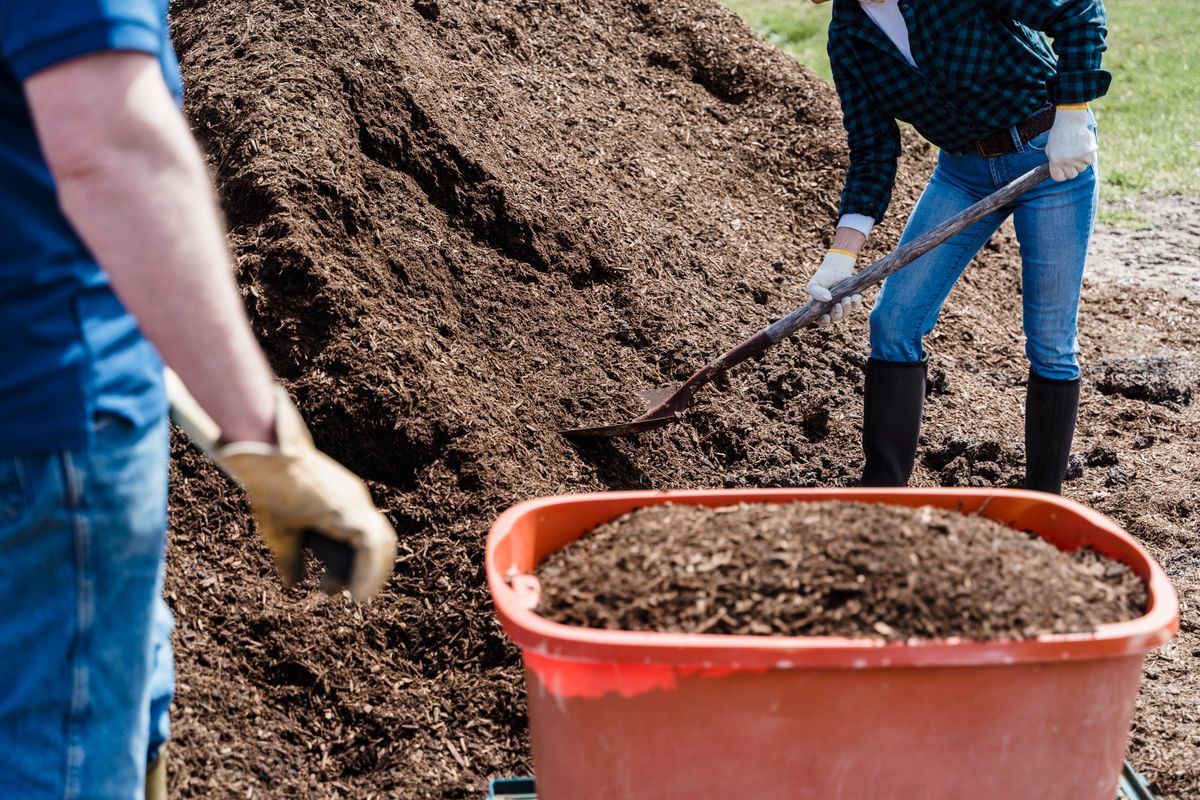
Bags tend to win on convenience, bulk on price. The break-even point sits at roughly one cubic yard, which is 14 bags at 2 cubic feet.
| Bagged | Bulk | |
|---|---|---|
| Best for | Under ~1 cubic yard | 1 cubic yard and up |
| Cost per cubic foot | $1.75–$3.50 | $1.10–$2.20 before delivery |
| Getting it home | Fits in any car, a few bags at a time | Needs a truck or a delivery |
| Handling | Sealed, storable, no mess | One pile to shift with a wheelbarrow |
| Waste | A plastic bag per 2 cubic feet | None |
Rule of thumb: under half a yard, buy bags. Over a yard, price a bulk delivery — the saving usually covers the delivery fee on its own, and you avoid dozens of plastic bags.
Mulch needed for common projects
Typical amounts for popular garden jobs at 3 inches deep, using standard shredded hardwood. Figures exclude the 10% buffer.
| Project | Size & depth | Cubic yards | Bags (2 cu ft) |
|---|---|---|---|
| Small front border | 20 × 3 ft @ 3" | 0.56 yd³ | 8 bags |
| Foundation bed | 30 × 4 ft @ 3" | 1.11 yd³ | 15 bags |
| Tree ring | 6 ft circle @ 3" | 0.26 yd³ | 4 bags |
| Raised bed top-up | 4 × 8 ft @ 2" | 0.20 yd³ | 3 bags |
| Vegetable garden | 20 × 20 ft @ 2" | 2.47 yd³ | 34 bags |
| Wood-chip path | 40 × 3 ft @ 4" | 1.48 yd³ | 20 bags |
| Whole front yard | 1,000 sq ft @ 3" | 9.26 yd³ | 125 bags |
How many bags of mulch are in a yard?
A cubic yard is 27 cubic feet, so the bag count depends entirely on the bag size. Most bagged mulch sold in North America is 2 cubic feet.
| Bag size | Bags per cubic yard | Bags per ½ cubic yard | Common on |
|---|---|---|---|
| 1 cu ft | 27 bags | 14 bags | Compost, specialty mulch |
| 1.5 cu ft | 18 bags | 9 bags | Cedar, cypress, premium bark |
| 2 cu ft | 13.5 → 14 bags | 7 bags | Standard hardwood and dyed mulch |
| 3 cu ft | 9 bags | 5 bags | Pine bark nuggets, wood chips |
| 0.8 cu ft | 34 bags | 17 bags | Rubber mulch |
You can't buy half a bag, so round up: a cubic yard is 14 bags at 2 cubic feet.
How many bags of mulch are on a pallet?
Typically 65 bags of 2 cu ft — about 4.8 cubic yards — though suppliers run from roughly 50 to 70, and pallets of 1.5 cu ft bags around 90. Confirm the count before comparing a pallet price with a bulk price; the two are only comparable per cubic foot.
How many cubic feet are in a yard of mulch?
27 cubic feet. A cubic yard is a cube 3 ft × 3 ft × 3 ft — the same conversion for mulch, soil, compost or gravel, and the number every bulk order runs on.
Poured out, a cubic yard is a heap about 3 ft on each side. It fits in a full-size pickup bed with room to spare — level, it fills roughly half the bed — and by weight a full-size pickup will usually take two to three yards of mulch.
How much does mulch weigh?
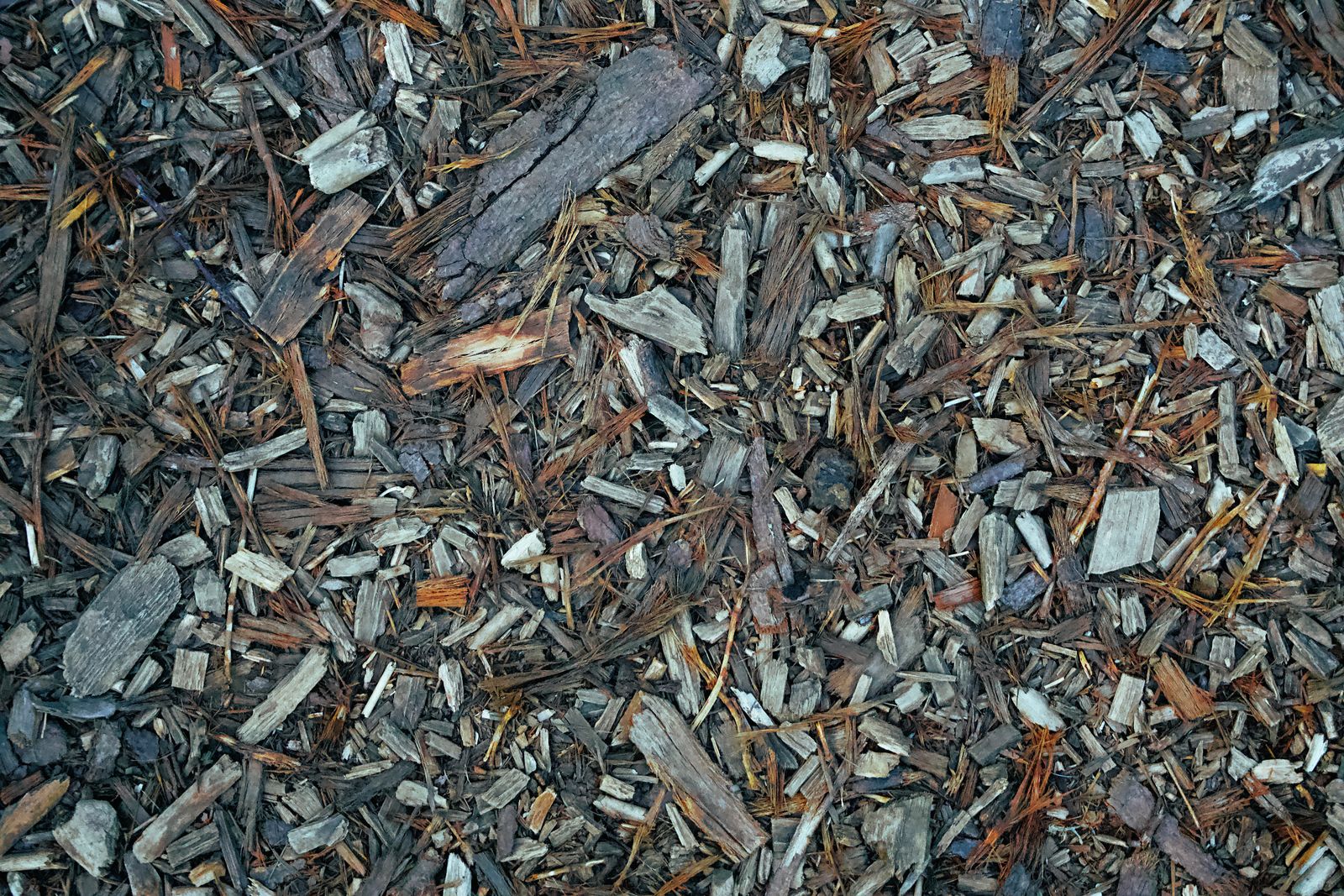
Mulch is light next to soil or gravel, but the number matters if you are hauling it. A cubic yard of shredded hardwood runs roughly 500–700 lb dry — a quarter to a third of a ton — and half as much again after rain. Every figure below is dry weight.
| Material | Density | Weight per cubic yard | Weight per 2 cu ft bag |
|---|---|---|---|
| Shredded hardwood / bark | ~20 lb/ft³ | ~540 lb | ~40 lb |
| Wood chips | ~18 lb/ft³ | ~490 lb | ~36 lb |
| Cedar or cypress | ~17 lb/ft³ | ~460 lb | ~34 lb |
| Pine bark nuggets | ~13 lb/ft³ | ~350 lb | ~26 lb |
| Shredded leaves | ~10 lb/ft³ | ~270 lb | ~20 lb |
| Straw / pine straw | ~4 lb/ft³ | ~110 lb | ~8 lb |
| Compost as mulch | ~40 lb/ft³ | ~1,080 lb | ~80 lb |
| Rubber mulch | ~45 lb/ft³ | ~1,215 lb | ~36 lb per 0.8 cu ft bag |
How much does mulch cost?
For a small bed, bagged mulch is the simplest option at about $3.50–$7 per 2 cu ft bag. For anything over about a cubic yard, bulk is cheaper per cubic foot: common hardwood mulch runs $30–$60 per cubic yard before delivery, with dyed and premium bark costing more. Typical US ranges:
- Bagged, 2 cu ft: $3.50–$7 for hardwood or dyed, $5–$9 for cedar and cypress
- Bulk, per cubic yard: $30–$60 hardwood, $45–$90 premium, dyed or cedar
- Delivery: $60–$120 per load, often free above a minimum order
- Spread by a crew: add $60–$120 per cubic yard, or roughly $0.50–$1.20 per square foot
Prices vary by region, supplier and season, and mulch is usually cheapest in early spring before demand peaks. Enter your local price in the calculator for a figure that reflects what you will actually pay.
Mulching around trees — how much, and the mistake to avoid
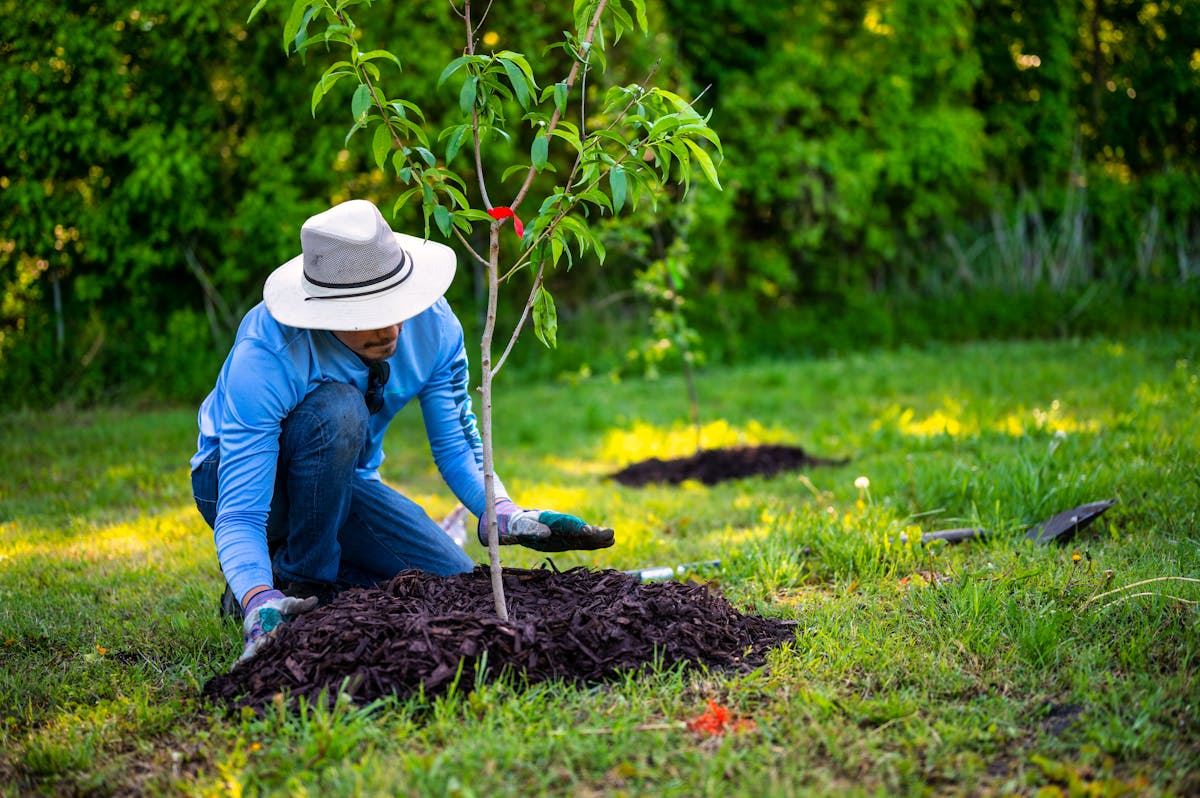
A ring of mulch is one of the more useful things you can do for a young tree: it keeps mower blades and trimmers off the bark, holds moisture through summer and evens out soil temperature. Two rules matter:
- Make the ring wide, not deep. Aim for a ring at least 3 feet across on a young tree, ideally out to the drip line on a mature one. A wide 3-inch ring does far more for a tree than a narrow deep one.
- Keep mulch off the trunk. Leave a bare collar of 3–6 inches around the base so the root flare is visible.
The tree ring shape in the calculator subtracts the bare circle at the trunk from the outer ring for you.
Mulch in raised garden beds
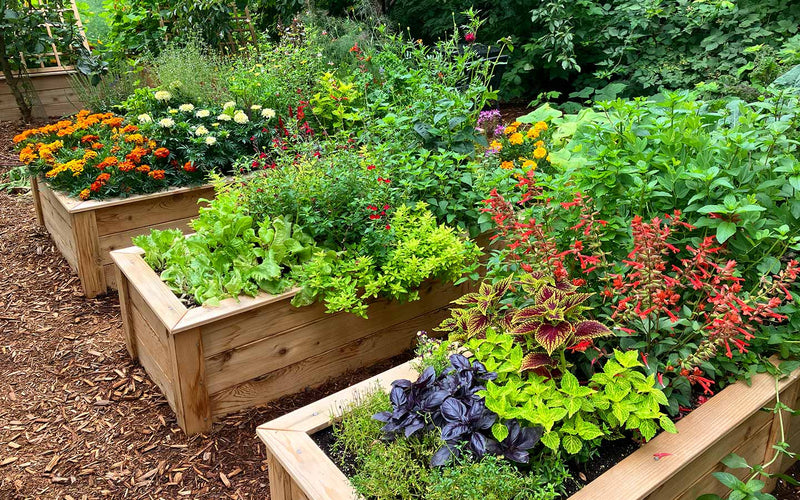
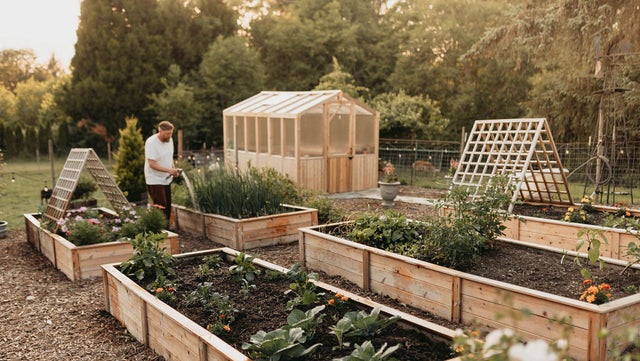
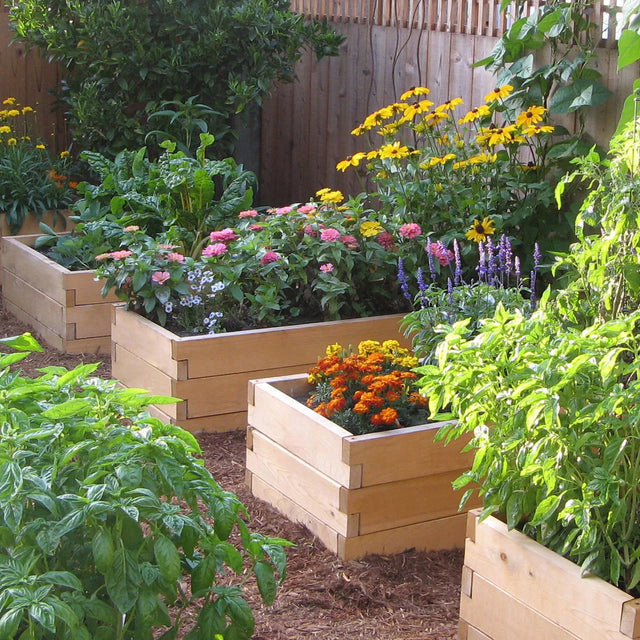
Raised beds need less than ground-level beds — 1 to 2 inches is plenty. Deep mulch keeps spring soil cold, and in a confined bed fine mulches mat and shed water instead of letting it through. Straw, shredded leaves and compost all work; keep chunky bark and wood chips for permanent plantings and paths.
For a 4 ft × 8 ft bed at 2 inches, that is about 5.3 cubic feet — three bags, or a fifth of a cubic yard. For which material suits which crop, see our guide to the best mulch for raised garden beds.
Filling a new bed rather than topping one up is a soil question — use the soil calculator for the fill volume, then come back here for the mulch layer.
How the mulch you pick changes the amount
The volume is the same whatever you buy. What changes is the weight and how fast it breaks down — which decides how often you buy it again. Budget on topping beds up with 1–2 inches a year, roughly a third to two-thirds of the original volume, rather than replacing the layer. For which material suits which planting, see the best mulch for raised garden beds.
| Mulch | Best for | Lasts | Notes |
|---|---|---|---|
| Shredded hardwood | Beds, borders, slopes | 1–2 years | Knits together and stays put on a slope |
| Wood chips | Paths, tree rings, orchards | 2–3 years | Often free from tree crews or municipal yards |
| Cedar / cypress | Ornamental beds | 2–3 years | Slow to break down; adds little to the soil |
| Pine bark nuggets | Shrub beds | 2–3 years | Floats — avoid on slopes and in downpours |
| Pine straw | Acid-loving plants, big beds | 1 year | Very light; sold by the bale |
| Straw | Vegetable beds, new seed | 1 season | Buy certified weed-free straw, not hay |
| Compost | Vegetable beds | 1 season | Feeds the soil; keep to 1–2 inches |
| Shredded leaves | Any bed, autumn | 1 season | Free; shred first so they don't mat |
| Rubber | Permanent paths, play areas | 10+ years | Adds nothing to the soil, cannot be composted, and sheds microplastics as it wears |